
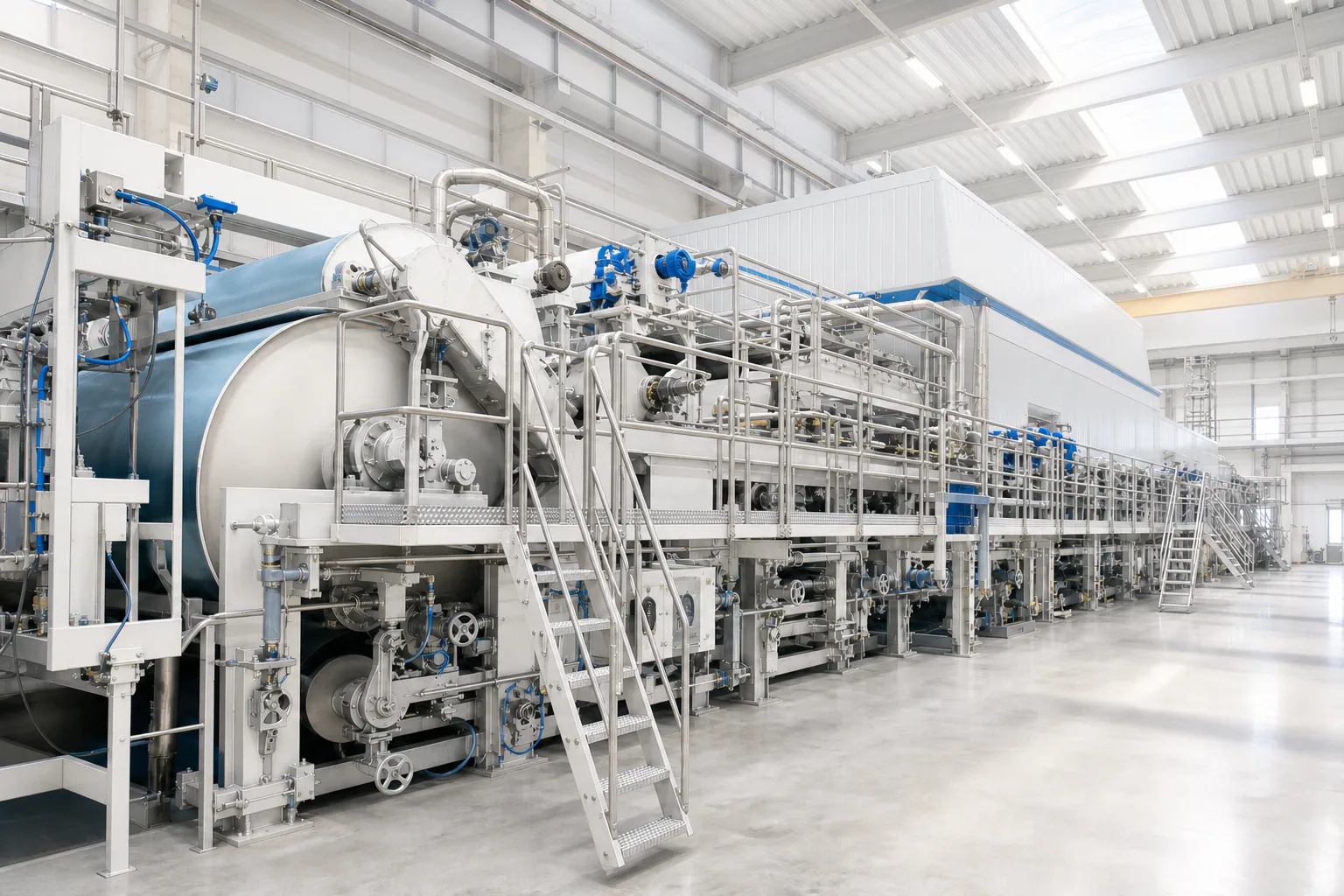
A Crescent Former tissue machine should be selected around the paper you intend to sell and the conditions in which the line will operate. A headline speed or capacity is not enough. Buyers need to connect product requirements, furnish, utilities, machine interfaces and service scope before comparing quotations.
1. Start with the finished tissue grade
Define whether the line will produce toilet tissue, facial tissue, napkin, kitchen towel or a mix of grades. Each product has different expectations for basis weight, softness, strength, absorbency and converting performance. The intended grade influences forming, pressing, drying, creping and reel handling decisions.
If several grades are planned, provide a target range rather than one nominal value. The supplier can then discuss which operating adjustments are practical and which changes would require different equipment or fabrics.
- Target paper grades and basis-weight range
- Finished roll or converting requirements
- Priority properties: softness, bulk, strength or absorbency
2. Confirm furnish and stock preparation conditions
Virgin fibre, recycled fibre and blended furnishes behave differently. Fibre source, refining strategy, additives and water quality affect drainage and sheet development. Share the furnish plan and available stock preparation equipment early, especially when a new machine must connect to an existing system.
A useful quotation should state the assumed furnish and identify customer-supplied systems. This prevents capacity expectations from being separated from the raw material conditions used to define them.
3. Treat capacity, width and speed as one system
Daily output, trimmed paper width, basis weight, operating efficiency and speed are related. Ask the supplier to show the design basis behind the stated production target. Distinguish mechanical design speed from the expected operating point for the selected grade.
Also confirm reel diameter, core specification and downstream converting limits. A parent reel that cannot be handled by the customer’s rewinder creates avoidable work even if the paper machine reaches its output target.
- Trimmed and machine width
- Target and design speed
- Expected daily output by grade
- Parent reel diameter and core details
4. Review steam, power, water and air
Utility limitations can change the suitable configuration. Provide available steam pressure, electrical standard, fresh-water conditions, compressed-air supply and wastewater constraints. If the plant is still being designed, ask for a utility consumption schedule tied to the proposed scope.
The dryer, hood, vacuum system, drives and auxiliaries should be reviewed together. A balanced system is more valuable than optimizing one machine section in isolation.
5. Compare scope boundaries, not only price
Two quotations can look similar while including very different equipment, instrumentation, piping, electrical work, drawings, supervision and spare parts. Request a clear inclusion and exclusion list. Mark interfaces with civil works, stock preparation, boilers, air systems and converting equipment.
For an export project, confirm packing, documentation, installation guidance, commissioning responsibility and the process for resolving technical questions. These items affect schedule and risk long after the purchase order is placed.
A practical RFQ checklist
A complete first inquiry does not need a finished specification. It should, however, provide enough information for an engineering conversation.
- Paper grade and basis-weight range
- Furnish and stock preparation status
- Working width, reel size and capacity target
- Power frequency and voltage
- Steam, water and compressed-air conditions
- Site layout or existing machine drawings
- Required delivery, installation and commissioning scope
FREQUENTLY ASKED QUESTIONS
Questions buyers often ask
What information is needed for a Crescent Former tissue machine quotation?
Start with paper grade, basis-weight range, furnish, trimmed width, production target, utility conditions and the required supply scope.
Should buyers compare machines by design speed?
No. Design speed is only one reference. Compare the expected operating point for each paper grade, the assumptions behind output and the complete system scope.
Can one line make several tissue grades?
A line may be configured for a grade range, but the practical range depends on furnish, machine configuration, fabrics, creping conditions and converting requirements. Confirm each target grade during engineering.