
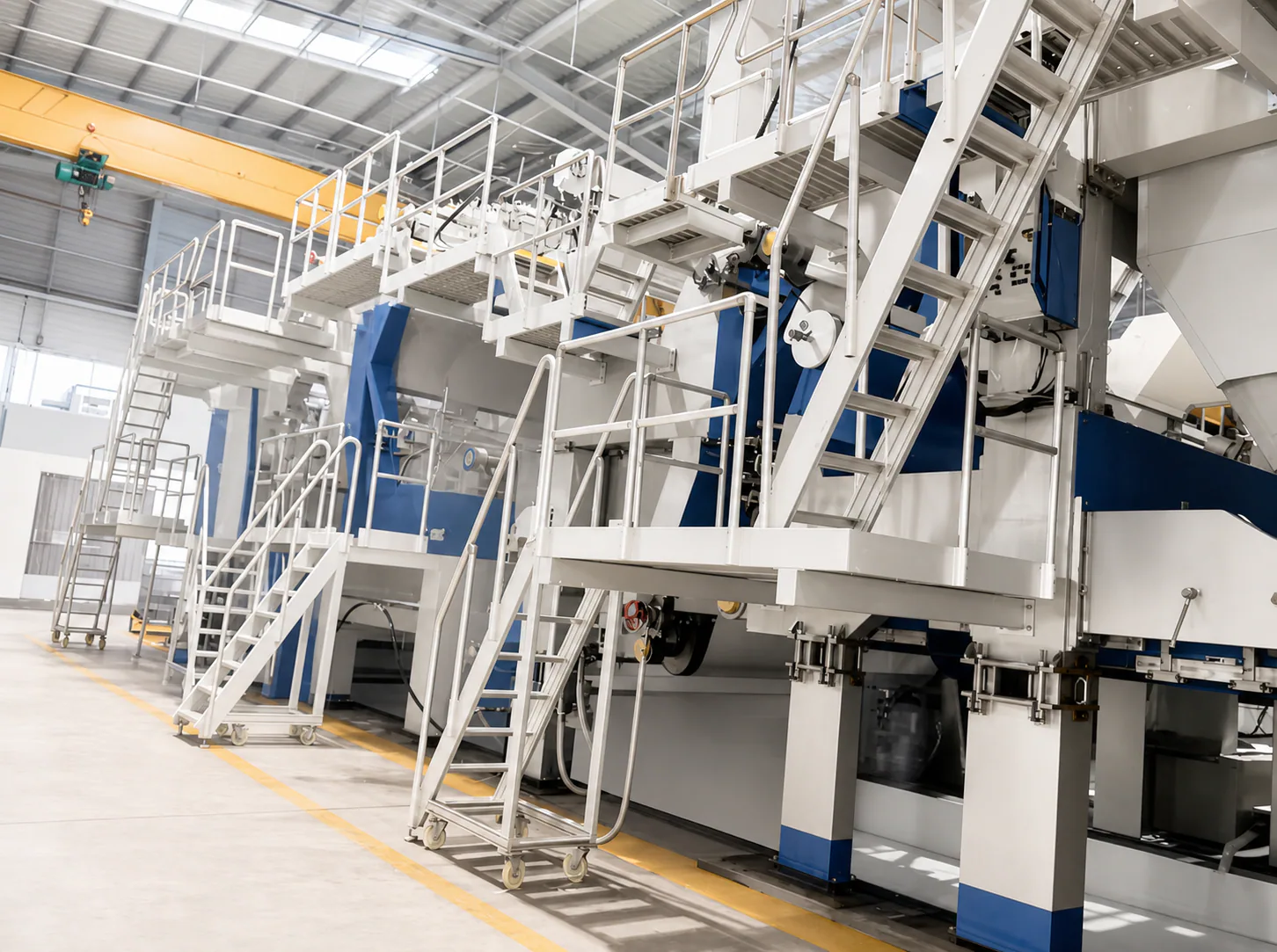
A corrugated paper machine should be selected around the grades you intend to sell, the furnish available to the mill and the real operating conditions of the project. Capacity alone cannot define a suitable line. Buyers should compare the design basis, scope boundaries and long-term operating requirements behind every quotation.
1. Define the paper grades and quality targets
List the planned grades, basis-weight range and the strength, moisture and surface requirements important to your customers. Fluting medium and liner grades place different demands on stock preparation, forming, pressing, drying and finishing.
If the mill will change frequently between grades, tell the supplier. A broad production range may affect the headbox, approach flow, drive sections, automation and operating procedures.
- Paper grade and basis-weight range
- Finished roll width and diameter
- Priority quality properties
- Expected grade-change frequency
2. Describe furnish and stock preparation
Provide the planned raw-material mix and the condition of recovered paper or other fibres. Contaminants, fibre quality and water-loop conditions influence screening, cleaning, refining and drainage.
A quotation should clearly identify whether pulping, screening, approach flow and broke handling are included. Capacity claims should be tied to stated furnish assumptions.
3. Connect output, width and speed
Ask for the calculation basis behind daily output, including trimmed width, basis weight, target operating speed and expected efficiency. Mechanical design speed should not be confused with a normal production point.
Confirm winder limits, reel handling, core requirements and warehouse logistics. The paper machine and finishing section need to work as one production system.
4. Review utilities and site interfaces
Share available steam, electrical supply, fresh water, compressed air and wastewater constraints. Dryer, hood, vacuum, drive and water systems should be reviewed together.
For a new mill, request a utility schedule and preliminary layout. For a rebuild, supply drawings, elevations and photographs so that interfaces and shutdown work can be evaluated early.
5. Compare complete supplier scope
Compare inclusions, exclusions, instrumentation, controls, spare parts, technical documents, packing and commissioning support rather than only the headline price.
A clear responsibility matrix reduces gaps between the machine supplier, civil contractor, utility providers and the mill team.
- Process and equipment scope
- Civil and utility interfaces
- Automation and electrical boundaries
- Installation, commissioning and training
- Initial spares and technical documentation
FREQUENTLY ASKED QUESTIONS
Questions buyers often ask
What data should a corrugated paper machine RFQ include?
Include paper grades, basis-weight range, furnish, width, output target, utility conditions, reel requirements, site information and the required supply scope.
Is design speed the best way to compare quotations?
No. Compare the expected operating point, stated furnish and efficiency assumptions, product range and complete system configuration.
Can an existing line be rebuilt in stages?
Often yes, but the sequence depends on bottlenecks, interfaces and shutdown availability. A site audit and operating-data review should come first.