
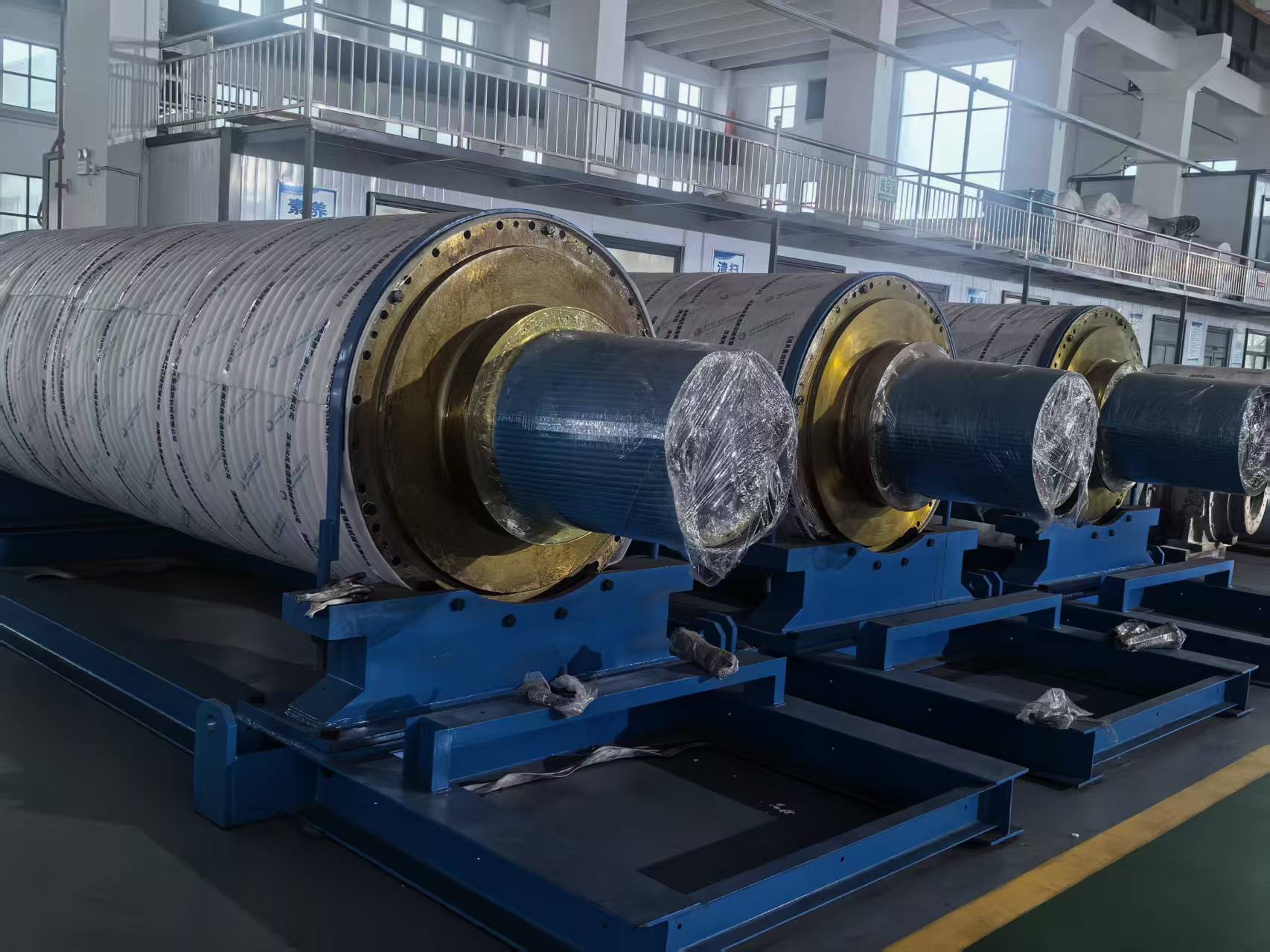
Paper machine rolls operate under different loads, temperatures, moisture levels and surface duties. A useful specification must begin with the exact machine position. Diameter and face length are necessary, but they are not enough to select a reliable replacement or rebuild scope.
1. Identify the roll position and duty
State the machine section, roll name and function. Forming, press, dryer, guide, felt and reel positions have different requirements for load, drainage, traction, temperature and surface finish.
For replacements, provide the existing drawing and record the failure or performance problem. Photos, vibration observations and maintenance history can help define the right review.
2. Specify geometry and operating conditions
Confirm shell diameter, face length, journal dimensions, bearing arrangement, rotational speed, line load and temperature. Include water, steam, chemicals or abrasive contaminants that contact the roll.
Where the roll must interchange with existing equipment, identify critical fits, centre distances and handling limitations.
- Roll drawing and machine position
- Speed, load and temperature
- Shell and journal material
- Bearing and lubrication arrangement
- Surface finish, grooves or drilling
3. Select the surface for the application
Cover material and surface geometry influence release, traction, wear and sheet or fabric condition. Selection should consider the mating fabric, doctoring, showers, chemicals and cleaning practice.
Do not copy a cover specification without reviewing the duty. A successful material in one position may not suit another roll or paper grade.
4. Control balance, runout and inspection
Operating speed determines the importance of balance quality, runout and concentricity. Ask the supplier to state inspection methods and the records delivered with the roll.
For repaired rolls, agree which dimensions, shell condition, welds, journals and bearings will be inspected before work begins. Unexpected findings should be reported before the scope changes.
5. Build a preventive maintenance record
Track vibration, bearing temperature, lubrication, surface damage and doctor-blade wear by roll position. Trend data is more useful than isolated readings.
Protect spare rolls from corrosion, contamination and bearing damage during storage. Define lifting points and transport supports so precision surfaces are not used for handling.
FREQUENTLY ASKED QUESTIONS
Questions buyers often ask
What information is needed for a replacement paper machine roll?
Provide the drawing, machine position, duty, speed, load, temperature, surface requirements, bearing arrangement and observed operating problem.
Why is dynamic balance important?
At operating speed, imbalance can contribute to vibration, bearing load and quality problems. The required balance should match the roll and application.
Should a roll cover be selected only by hardness?
No. Material, resilience, chemical resistance, temperature, surface finish and the interacting fabric or doctor system must also be considered.